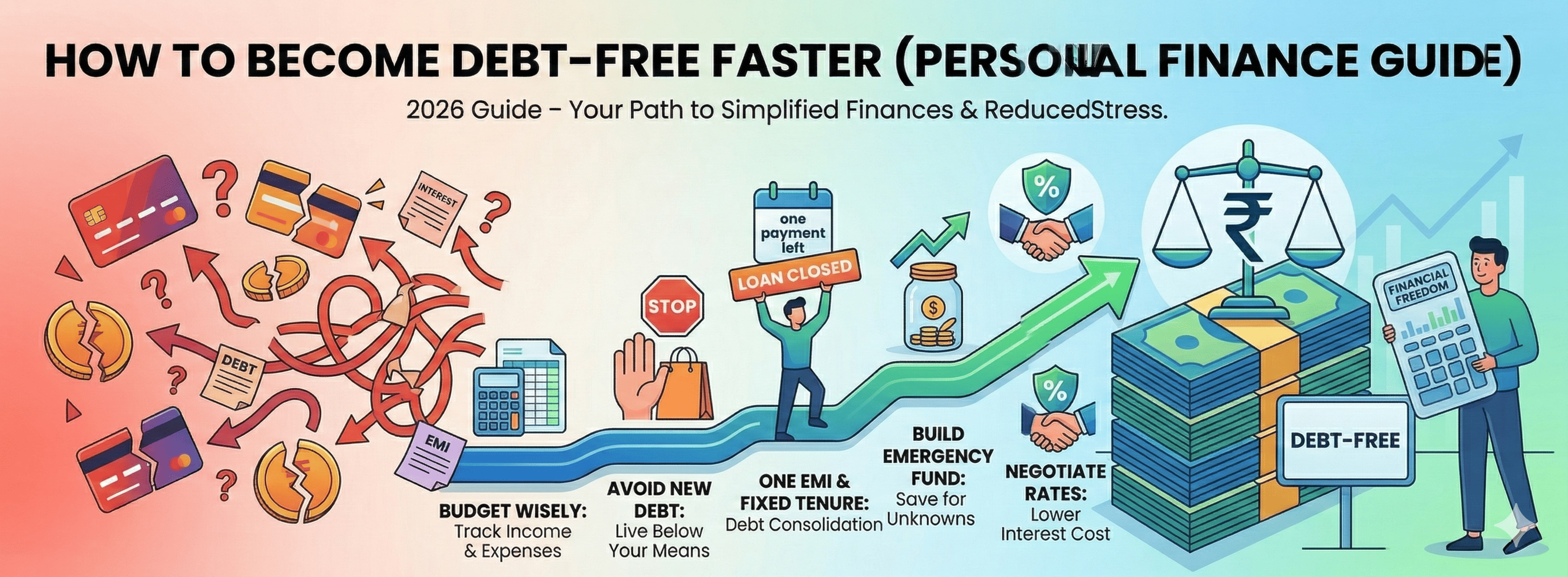
How to Become Debt-Free Faster (Personal Finance Guide 2026)
Debt has become a common part of modern financial life. Many people rely on loans, credit cards, and financing options to meet various financial needs such as buying a home, funding education, or handling emergencies.
While borrowing can be useful, carrying too much debt can create financial stress and reduce long-term financial security.
Becoming debt-free allows individuals to regain financial control, improve credit scores, and focus on building wealth instead of paying interest.
In this guide, we will explore practical strategies that can help you become debt-free faster and manage your finances more effectively.
Why Becoming Debt-Free is Important
Reducing debt provides several financial and psychological benefits.
Some of the key advantages include:
• Lower financial stress
• Improved credit score
• More monthly cash flow
• Ability to save and invest more
• Greater financial freedom
By eliminating debt, individuals can focus on long-term financial goals such as investing, retirement planning, and asset building.
Understand Your Current Debt Situation
The first step toward becoming debt-free is understanding your current financial obligations.
Create a list of all your debts, including:
• Personal loans
• Credit card balances
• Home loans
• Car loans
• Education loans
For each loan, note the following details:
• Outstanding balance
• Interest rate
• Monthly EMI
• Remaining tenure
Having a clear overview of your debts helps you develop an effective repayment strategy.
Create a Debt Repayment Plan
Once you understand your debts, the next step is to create a structured repayment plan.
A repayment plan should include:
• Prioritizing high-interest debts
• Allocating extra money toward repayments
• Avoiding new unnecessary debts
A clear plan helps accelerate debt repayment.
Use the Debt Snowball Method
The debt snowball method focuses on paying off smaller debts first.
Steps involved include:
List debts from smallest to largest
Pay minimum payments on all debts
Put extra money toward the smallest debt
Once cleared, move to the next debt
This strategy creates psychological motivation by achieving quick wins.
Use the Debt Avalanche Method
The debt avalanche method focuses on eliminating high-interest debts first.
Steps include:
List debts by interest rate (highest first)
Pay minimum payments on all loans
Direct extra funds toward the highest interest debt
This method reduces the total interest paid over time.
Increase Your Monthly Debt Payments
One of the fastest ways to become debt-free is by paying more than the minimum required EMI.
Even small additional payments toward the principal can significantly reduce the loan tenure and interest costs.
For example:
Paying an extra ₹2,000 per month toward a loan can shorten the repayment period by several months or even years.
Avoid Taking New Debt
A critical part of becoming debt-free is avoiding new borrowing.
Consider these habits:
• Reduce credit card usage
• Avoid unnecessary purchases
• Use cash or debit cards when possible
Responsible spending helps prevent additional financial burden.
Consolidate Multiple Debts
If you have multiple loans or credit card balances, debt consolidation may simplify repayment.
Debt consolidation involves combining multiple debts into a single loan with one EMI.
Benefits include:
• Simplified repayment
• Lower interest rate in some cases
• Better financial organization
However, borrowers should ensure the new loan offers better terms before consolidating.
Increase Your Income
Increasing income can accelerate debt repayment significantly.
Some ways to boost income include:
• Freelancing or side jobs
• Selling unused items
• Taking additional projects
• Monetizing skills or hobbies
Extra income can be directed toward faster loan repayment.
Build an Emergency Fund
Unexpected expenses can force individuals to rely on credit again.
Building an emergency fund helps prevent this.
Experts often recommend maintaining 3–6 months of living expenses in savings.
This financial cushion protects against emergencies without adding new debt.
Track Your Spending
Tracking expenses helps identify unnecessary spending that can be redirected toward debt repayment.
Consider using:
• Budgeting apps
• Monthly expense tracking
• Spending categories
Small savings can accumulate into significant amounts for debt reduction.
Stay Consistent with Repayments
Consistency is the key to becoming debt-free.
Maintaining disciplined repayment habits such as:
• Paying EMIs on time
• Avoiding late payment penalties
• Regularly reviewing financial progress
helps ensure steady progress toward financial freedom.
Frequently Asked Questions
How long does it take to become debt-free?
The time required depends on income, debt amount, and repayment strategy.
Which debt should be paid first?
High-interest debts such as credit cards should generally be prioritized.
Is debt consolidation a good idea?
Debt consolidation can be helpful if it reduces interest rates and simplifies repayment.
Can paying loans early improve credit score?
Yes, responsible repayment and reduced debt levels can improve credit scores over time.
Conclusion
Becoming debt-free requires discipline, planning, and consistent financial habits. By understanding your debt situation, creating a structured repayment plan, and adopting strategies such as the debt snowball or debt avalanche method, you can significantly reduce your financial obligations.
Increasing income, tracking expenses, and avoiding new debt can accelerate the process even further.
Achieving a debt-free life provides greater financial freedom and allows individuals to focus on long-term goals such as saving, investing, and building financial security.